Key takeaways
- ✓Shout “Man overboard!”, throw buoyancy and press the MOB button on the GPS or DSC radio straight away.
- ✓One person does nothing but point at the casualty until they are back alongside.
- ✓Sailing bodies and rescue services advise sending a distress call early — a person in the water is in grave and imminent danger.
- ✓Practise the return manoeuvre for your boat; under sail and under engine are different.
- ✓Prevention matters most: life jackets, harnesses and jacklines, and clipping on at night and in rough weather.
The first 30 seconds
- •Shout “Man overboard!” and the side — so the whole crew knows
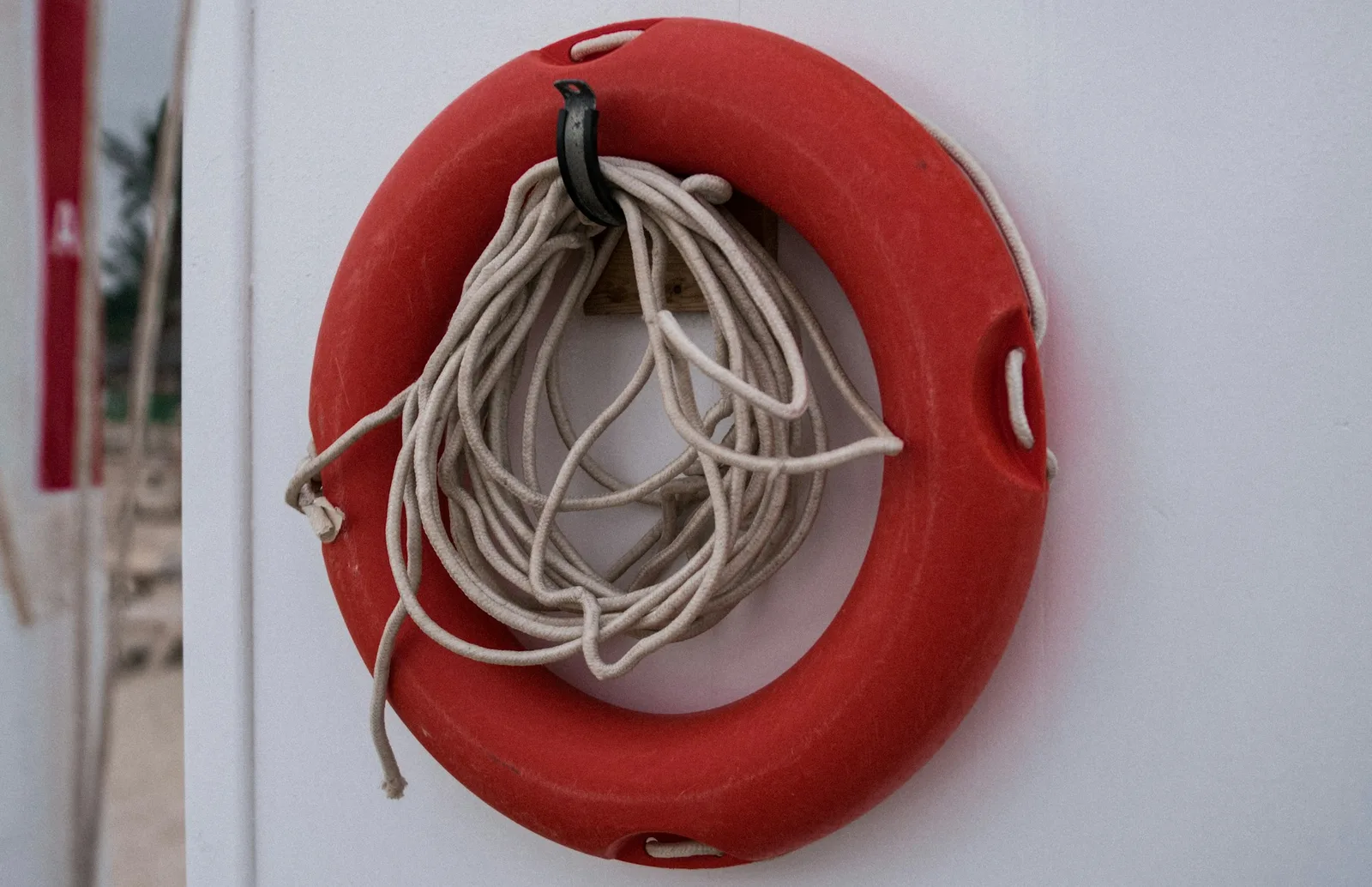
- •Throw the lifebuoy, danbuoy or throwing line towards the casualty
- •Press the MOB button on the chartplotter or DSC VHF to mark the position
- •Name one spotter who keeps pointing at the casualty and never looks away
- •Note the time — it helps rescuers calculate drift
Call for help early
Irish Sailing, US Sailing and most training bodies teach the same thing: a person overboard is a distress situation. Send a DSC distress alert and a MAYDAY on VHF channel 16 early, while the crew starts the return. It is far easier to cancel help that is no longer needed than to wait for it once a search is under way.
Getting back to the casualty
Keep the boat close to the person. Under sail, many crews use a quick stop — tacking or heaving to and circling back slowly — rather than sailing far away. Under engine, make sure every line is out of the water before using the propeller, and stop the engine or put it in neutral when you are close to the person in the water.
Approach slowly and stop with the casualty to leeward or alongside in the lee of the boat, where it is calmest. The right method depends on the boat and the crew, so practise it in good weather with a fender or bucket.
Recovery and aftercare
- •Get a line on the casualty as soon as possible
- •Use a recovery sling, lifting tackle, a halyard or the swim platform — a wet person is very heavy and often cannot help
- •Lift horizontally if possible if the person has been in cold water for some time
- •Treat for cold shock and hypothermia, and get medical advice by radio if needed
People often feel fine immediately after being recovered from cold water and then deteriorate. Keep monitoring them.
Prevention on a delivery
- •Wear a life jacket on deck — with crotch straps, a light and ideally a personal AIS beacon
- •Rig jacklines and clip on at night, in rough weather and when alone on deck
- •Never go to the side to relieve yourself at night without being clipped on
- •Brief every new crew on the MOB drill and equipment before departure
- •Agree a rule that whoever is on watch wakes another crew member before leaving the cockpit
Frequently asked questions
What is the first thing to do if someone falls overboard?+
Shout “Man overboard!”, throw buoyancy, press the MOB button on the GPS or DSC radio and assign one person to keep pointing at the casualty.
Should I call a MAYDAY for a man overboard?+
Training bodies and rescue services advise calling for help early, because a person in the water is in grave and imminent danger. You can cancel if the person is recovered.
What is the quick stop method?+
A way to stay close to the casualty under sail: turn the boat head to wind and circle back slowly, rather than sailing away and coming back.
How can I prevent falling overboard on a yacht?+
Wear a life jacket, use jacklines and a harness, clip on at night and in rough weather, and never go on deck alone without telling someone.
Sources
Topics in this guide: man overboard procedure · mob drill · crew overboard recovery · quick stop method · mob button gps
Put it to work