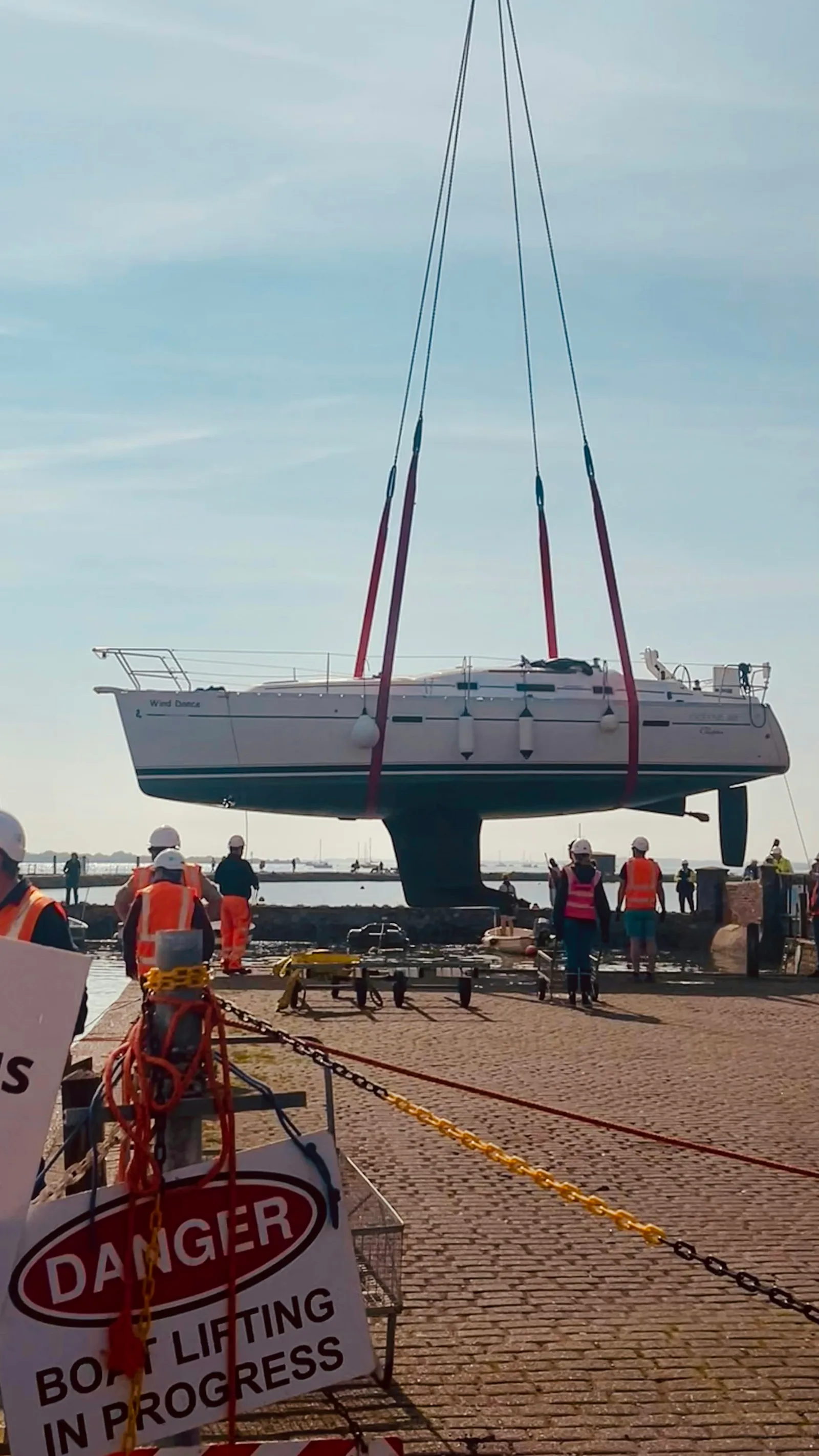
Key takeaways
- ✓Delivery by sea is usually the most flexible option and often the cheapest for shorter and medium distances.
- ✓Yacht transport on a ship avoids engine hours and wear, and can be the safer option across oceans in the wrong season.
- ✓Road transport works for smaller boats that fit legal size limits.
- ✓Get both kinds of quote, and compare the full cost — including insurance, preparation and what happens at each end.
Side by side
| Delivery by sea | Ship transport | Road transport | |
|---|---|---|---|
| Best for | Coastal and medium passages; ocean passages in season | Long ocean routes, out-of-season moves, motor yachts with limited range | Smaller boats on land routes |
| Timing | Flexible — leaves when the weather allows | Fixed sailing schedules; you fit the ship’s dates | Depends on permits and escorts |
| Wear on the boat | Engine hours, sails and rigging are used | Minimal sea wear; some handling risk when loading | Minimal sea wear; road vibration |
| Typical costs | Crew fees, flights, food, fuel and marina fees | Freight rate based on size, plus loading, cradle and port costs | Transport, permits, cranes |
| Biggest risks | Weather and breakdowns on passage | Delays to schedules; damage when loading | Size limits and handling |
When sailing it makes sense
- •The route has good weather in the season you need to move the boat.
- •The yacht is in good condition and ready for the passage.
- •You want flexibility on dates, or to use the trip to test the boat.
- •The distance is moderate — a few hundred to a couple of thousand miles.
When shipping it makes sense
- •Crossing an ocean in the wrong season, e.g. during the hurricane season.
- •Motor yachts with limited range on long ocean routes.
- •You want to avoid engine hours, sail wear and crew costs on a very long trip.
- •A fixed arrival date that suits a ship’s schedule.
Questions to ask either way
- •What exactly is included in the price, and what is extra?
- •Who insures the boat during the move — and does my policy accept this method?
- •How is the boat’s condition recorded at the start and at the end?
- •What happens if there are delays?
If you choose to sail it, Maritime Delivery lets you post the trip for free, hire an ID- and certificate-verified skipper, and record the boat’s condition with a digital handover report at both ends.
Frequently asked questions
Is it cheaper to sail a yacht or ship it?+
For shorter and medium distances, a delivery by sea is often cheaper. On long ocean routes, especially out of season, shipping can be competitive once crew costs, wear and risk are included. Get written quotes for both.
Does yacht transport cause less wear?+
Yes, there is little wear at sea when a yacht rides on a ship. But loading and unloading carry their own handling risk, so check how the boat is lifted and secured.
Do I need different insurance for shipping a yacht?+
Often yes. Many hull policies have conditions for transport by ship or road. Tell your insurer which method you plan to use and get confirmation in writing.
Sources
- Yachting Monthly — Yacht deliveries: how to get your yacht from A to B
- Good Old Boat — Yacht delivery by sea
- NOAA Ocean Prediction Center — marine forecasts
- World Sailing — Offshore Special Regulations
- How much does a yacht delivery cost? (Maritime Delivery guide)
- Insurance for a yacht delivery (Maritime Delivery guide)
- When to move a yacht: the season calendar (Maritime Delivery guide)
Put it to work