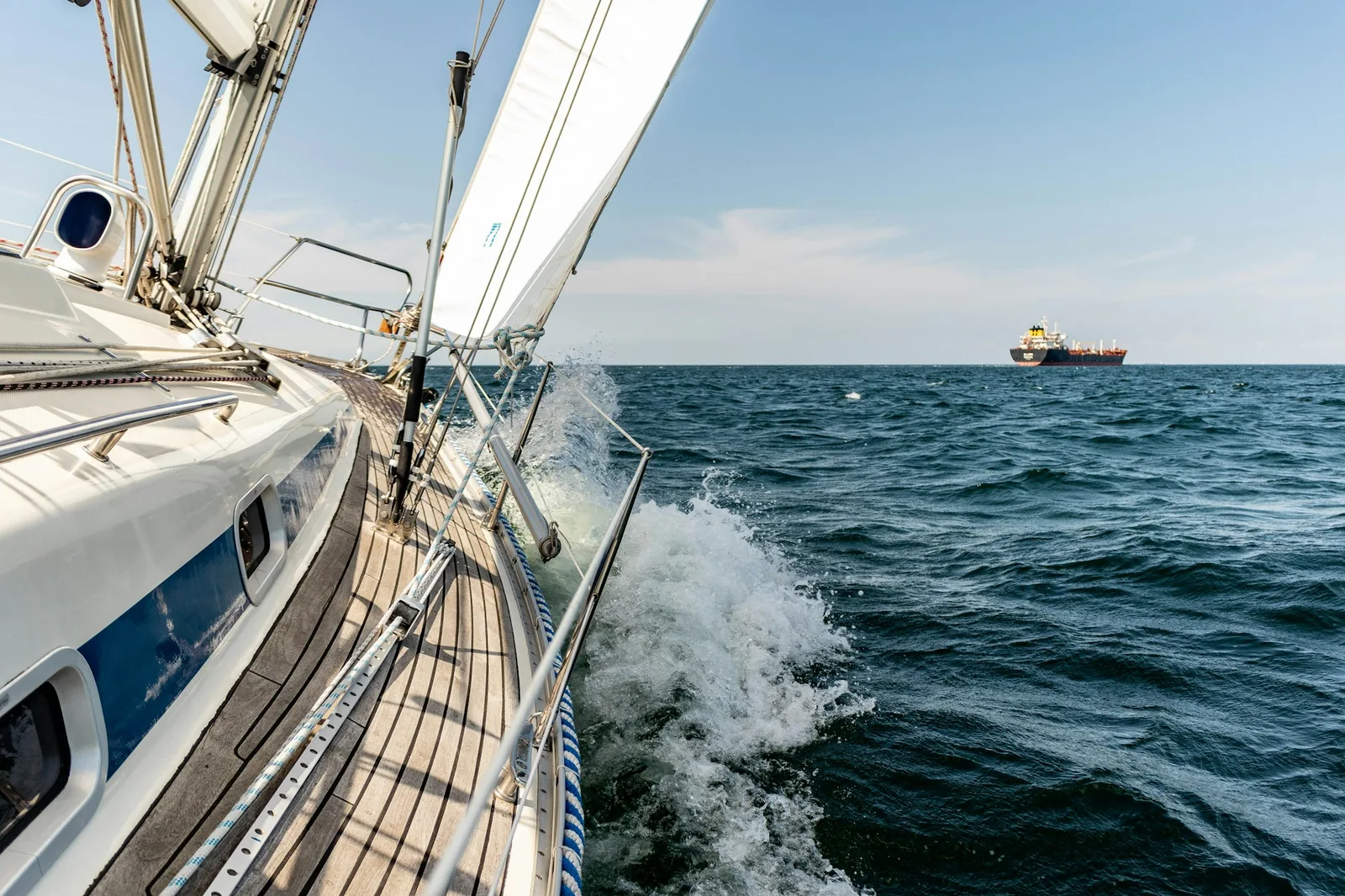
Key takeaways
- ✓Seasickness happens when your inner ear and your eyes send the brain different signals about movement.
- ✓Look at the horizon, get fresh air and stay near the middle of the boat, where the motion is smallest.
- ✓Avoid reading, screens, heavy or spicy meals and alcohol shortly before and during the passage.
- ✓Pharmacies sell tablets, patches (for adults and children over 10) and acupressure bands — a pharmacist can recommend what suits you.
- ✓Keep drinking water: dehydration makes it worse and becomes dangerous if you cannot keep fluids down.
What helps — and what does not
| Do | Avoid |
|---|---|
| Look at a fixed point, such as the horizon | Reading, phones and screens |
| Breathe fresh air — stay on deck if it is safe | Staying below, especially in the forepeak |
| Stay near the middle of the boat | Watching moving objects such as rolling waves |
| Close your eyes and breathe slowly | Heavy or spicy food and alcohol before and during the trip |
| Try ginger — tablets, biscuits or tea | Skipping meals altogether |
Medicines and other remedies
Pharmacies sell remedies that help prevent motion sickness: tablets (including dissolvable ones), patches that can be used by adults and children over 10, and acupressure bands, which do not work for everyone. A pharmacist can recommend the best option for you.
Most remedies work best when taken before you set off, and some cause drowsiness — read the leaflet and test a remedy on land or a short trip before a watch where you need to be alert. If you take other medicines or have a health condition, ask a pharmacist or doctor first.
Tips from the cockpit
- •Take the helm — steering and watching the horizon helps many people
- •Sleep and rest before departure; tiredness makes seasickness worse
- •Eat small, plain meals and snacks regularly, and sip water often
- •Prepare food and kit before the weather builds, so you are not working below in rough seas
- •Tell the skipper — they can adjust your watch or tasks, and nobody should go to the leeward rail alone without being clipped on
Severe seasickness that lasts for days, or being unable to keep any fluids down, can lead to dehydration. Get medical advice by radio if it does not improve.
Will I get used to it?
Most people adapt after a few days at sea, and many find they are less affected on later passages. Feeling seasick on your first delivery does not mean you are not made for the job — preparing well and telling your skipper early makes the biggest difference.
Frequently asked questions
What causes seasickness?+
The inner ear senses the boat’s movement while the eyes see something different, and these mixed signals make you feel unwell.
What is the best way to prevent seasickness on a boat?+
Look at the horizon, get fresh air, stay near the middle of the boat, avoid screens, heavy meals and alcohol, and ask a pharmacist about tablets or patches before you set off.
Does ginger help with seasickness?+
The NHS lists ginger — as a tablet, biscuit or tea — among the things you can try.
How long does seasickness last?+
Most people adapt after a few days at sea. Get medical advice if you cannot keep fluids down.
Sources
Topics in this guide: seasickness · how to prevent seasickness · seasickness remedies · seasickness on a sailing boat · motion sickness at sea
Put it to work